Monday, April 29, 2019

Has Bella Thorne Found Her Fashion Groove?

You could be forgiven for assuming you know all there is to know about Bella Thorne's style. The actress’s joie de vivre means she’s frequently spotted in brightly colored wigs and psychedelic fare, but there are layers to the former Disney star. On the heels of a best-selling book, Carnegie Hall performance, and successful makeup launch, Thorne has joined the ranks of multi-tasking celebrity entrepreneurs and adopted a look to match. At last night’s Los Angeles premiere of J.T. Leroy she arrived in an asymmetrical little black dress by DSquared2 with understated charm.

Though she piled on the bling and added sparkle with pieces from Mio Harutaka, Dannijo, and Swarovski, Thorne kept the majority of her outfit simple. Strappy sandals, a swipe of blue eyeliner, and ombre waves combined for a style that reflected her love of glamour while offering a new verve. Thorne and stylist, Mikiel Benyamin, have always kept things audacious. But as Thorne's fashions skew more sophisticated, it seems they’re set to show off a whole new side of the multi-talented performer.


Thursday, February 28, 2019

Birds of Passage examines the roots of a fictional cartel as the result of many small steps

North-American filmgoers are accustomed to movies that portray the drug trade to the south as a domestic concern, to be battled by some (see the excellent 2015 film Sicario), aided and abetted by others (The Mule, more recent, less stellar). Few films portray cartel members as anything other than faceless villains, or dig deep into the history of the trade.

Birds of Passage (Pájaros de verano), Colombia's foreign-language submission to the recent Academy Awards, takes an unusual tack on both fronts by examining the roots of a fictional cartel. And without glorifying the business or exonerating its participants, it suggests that such crimes can be the result of many small steps, individually defensible yet ultimately leading to bloodshed and misery.

The story opens in the late 1960s, and the marriage between Zaida (Natalia Reyes) and Rapayet (José Acosta). Both are members of the Wayúu, a proud indigenous group, native to what is now northern Colombia and Venezuela. (The word "alijuna," spoken often but never translated by the subtitles, is quickly understood to mean outsiders, literally "the ones who damage." That includes modern descendants of Spanish invaders as well as the more obvious American gringos.)

Rapayet and his buddy Moisés (Jhon Narváez) are at a café when they overhear some young American Peace Corps workers looking to score some weed. Moisés goes to his cousin to get some, the two make some easy money, and everyone is happy. It's that first, oh-so-defensible step.

Co-directors Carmina Martinez and José Acosta skip through the years that follow, with chapters set in 1971, 1979 and into the 1980s. In each segment the drug shipments are heavier, the payments bigger, and the threat (or actuality) of violence more pronounced. We also note, almost in passing, how the cars become more numerous and expensive, the dealers' houses more elegantly furnished.

Sunday, January 13, 2019

The best bargain face cleansers

There's always a little lull in January, where it's a fraction too early for beauty's spring launches, and the act of wearing any residual Christmas glitter and party makeup feels about as appealing as eating another turkey sandwich – so I invariably take the time to unearth some old skincare favourites. And, since this is the interminable month when people are mostly broke, the cheaper the products, the better.

Cleansers lend themselves perfectly to this process: I strongly believe that while cleansing itself is among the most important steps in achieving good skin, selecting the specific product with which to do it is among the least. As long as something removes all makeup without stripping the face dry, passes the towel test (no foundation smears when you dry off, ever) and leaves skin soft and comfortable, I'm happy. My preferred formula is cream, and there are plenty of excellent ones on the high street.

Superdrug, in particular, excels at them. I've been recommending its Vitamin E cleanser for donkey's years, but can as enthusiastically recommend its terrific, vegan-friendly Naturally Radiant Hot Cloth Cleanser on all skin types. It sweeps away everything, imparting a nice glow and no discomfort (swap its free cloth for a cotton flannel for best results). Another fantastic cleanser to which I return time and again, is The Body Shop's Vitamin E Cream Cleanser. I'd be as happy giving it to my 13-year-old niece as I would be in recommending it to her grandmother – and when used with a hand-hot flannel (as everything here should be), it keeps skin clean, fresh and nicely cushioned.

Beauty Pie's vegan Japanfusion Pure Transforming Cleanser was among my most-used products last year. It has a slightly different texture: it's a light gel-balm that massages into dry skin, then becomes milky when you add water, which makes for a lovely, refreshing morning cleanse on any complexion type, including super oily. Finally, a newer discovery from Sukin, a natural brand for which I've developed a soft spot. Its Sensitive Cream Cleanser is just that – soft, gentle, soothing. Everything here is cruelty-free.

Tuesday, December 4, 2018

Phones at gigs can be annoying – but they must never be banned

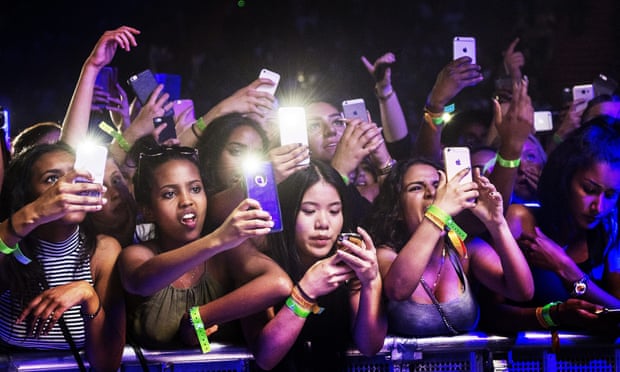
It reads like a particularly clumsy Black Mirror episode: a crowd at a gig all glued to the action on their phone screens rather than looking at the stage. But this is a common sight at live music events today, and one that the British public is getting more irritated by.

New research by the ticketing website Eventbrite polled more than 1,000 UK gig-goers for their opinions on using mobile phones during concerts. Of respondents, 70% said they were annoyed by people constantly taking video or photos of the show, and 69% said they would support "more than minimal action to minimise the disruption". Eventbrite's suggestions varied in popularity: "no-phone zones" and audience spot checks received less than 20% support each, but the idea of "gentle nudges to make phones more discreet" received 41% support.

There is of course a spectrum of behaviour here. Holding up an iPad with both hands to film a gig, as I once saw, is so brazen as to almost be laudable, but ultimately hateful. More common is someone – generally male – stood motionless with their phone out, ready to upload the footage to their own YouTube channel for an audience of 17 people. Not only is this protracted filming annoying for the audience, artists probably don't appreciate this bootlegging; some artists, such as Jack White and Sam Smith, have recently demanded phones be locked in special pouches before their show begins.

Much of this annoyance and friction, though, is good old intergenerational conflict. Half of all respondents said they themselves took photos or video at gigs, but this rose to 62% among 18-24 year-olds. At your average rap gig, where the audience is dominated by this demographic, 62% seems conservative: the arrival of the star on stage is always met by a sea of phones.

For a generation normalised to constant documentation of their surroundings, being forced to stop would seem totalitarian, and indeed it is. At a rap show, theirs isn't the leaden documentation of the YouTube bootlegger: this chaotic shaky-cam footage feels woven into the chaos of the gig, networking it beyond the building's bricks and mortar; the lights of screens and flashes help to spill the energy off the stage and unify crowd and performer.

Friday, November 9, 2018

Does being a doctor make me a better parent?

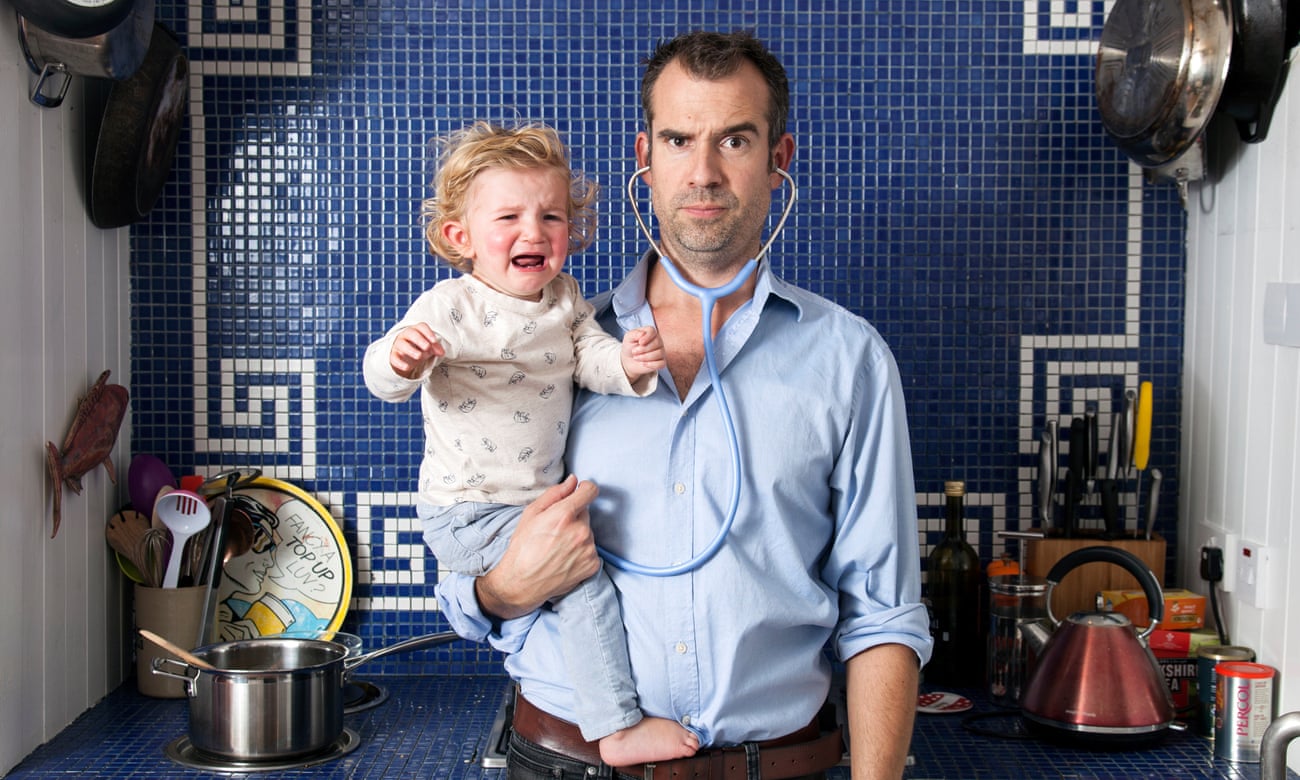
I was standing in the check-in queue, sunburned, exhausted and very late for a seven-hour flight from Toronto to London. My wife had, sensibly, returned from the holiday a day earlier. In one arm I held my screaming one-year-old daughter, Lyra. Her folded pram was slung over the other shoulder. I was clutching passports and a nappy bag and surrounding me on the floor were my suitcases and an assortment of carrier bags overflowing with food, nappies, books and toys. Lyra went silent, I felt her abdomen tense, her face turned deep crimson and she forced out a long and resonant fart which sounded far more like it came from me than from her. A little area cleared around me in the airport. For some reason, probably fatigue, I put a finger into the nappy gusset to check that it was just a fart. It wasn't.

There are superficial similarities between being a doctor – especially an infectious diseases doctor like me – and the first year of parenthood. Faeces is the common currency of both tasks. Viruses abound. A friend who is a paediatrician likes to say that, up until the age of five, children are functionally HIV positive. We've had stretches of months where coughs, snot and bouts of diarrhoea have taken turns wrecking sleep for everyone while I remain helpless.

So far there have been exactly two occasions where I felt skilful as a parent because I am a doctor. First, Lyra was born in a heatwave. I kept her hydrated and avoided admission to hospital for IV fluids even though we were struggling with breastfeeding.

The second display of skill came when Dinah had an episode of mastitis, a blocked infected milk duct. We used hands, expression pumps and, of course, a baby, to drain the infected breast. The best moments of parenting are inextricably mingled with the worst. All three of us naked in the bath at 2am, covered in rapeseed oil for the boob massage, the water cloudy with milk, and the fever finally subsiding – a high and low point in equal measure.